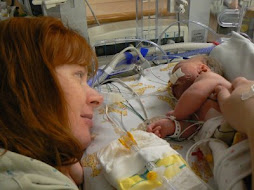
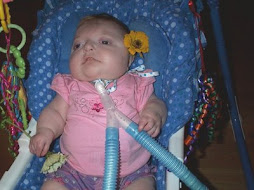
This is a picture from Friday, when the OT & PT were working with Ambrose, after the EEG techs had sabotaged his hair. (He had a bath and shampoo afterward.) They are wearing gowns and gloves because he is on "contact precautions." Nearly every patient in here is. I think it is because of the swine flu scare. Initially he was also on "droplet precautions",(because he was coughing) which meant everyone had to wear a mask as well. It seems rediculous to me at this point since he has been here for 2 weeks. But I guess it protects him too.
Yesterday Ambrose spent 14 hours straight off the the CPAP and did great. Today, they will try leaving him off and hopefully keeping him off so we can go home soon. I will speak to him about this. Send him good breathing energy.
Last night I went out to dinner with my dear friend, Sonja, who I haven't seen since we baked Christmas cookies at her house when I was 6 months pregnant. It was great to catch up and to get a break from hospital life for a few hours. Today, Ambrose and Sophia's nurse and "adoptive grandma" Roberta is coming up to take me out to lunch for Mother's Day. I love her!
This morning a resident, who I have seen around but who had not made any eye contact with me, came into the room to listen to Ambrose. As we began having a friendly exchange about him I suddenly recognized her as the resident I had had a terrible experience with in the emergency department in December. It had been so bad I ended up telling her off and complaining about her. Which, if you know me , you know it must have been pretty bad for me to tell her off. I've never done that in the nearly full year of my life I've spent in this hospital. Boy do I have a bad memory for faces. I had wondered when I would have to see her again. Anyway, I'm sure things will go much better this time around.
Ambrose had had an increase in seizures on Friday after an initial reduction in seizures after starting the ketogenic diet. They made a few changes to meds and yesterday was much better. I only saw 3. Also, his blood sugar issues seem to have been resolved by the slight adjustment to his diet.
Happy Mother's Day to all you mothers out there!


 Posts
Posts